where unease
sharpens the beauty
The task was simple — depict evil. My response was immediate.
The image formed itself before the hand could argue — three sharp triangular planes cutting through a field of red and white. I kept the colours uncompromising — black, red, white with a trace of blue to hold the tension. Soft pastels and charcoal.
Evil often presents itself in the disguise of beauty. Once it etches into the structure, it leaves a searing mark — sometimes visible, sometimes not, but always there.
A few years later, as I immersed myself in surface pattern design, a question appeared almost on its own:
Would EVIL work well as a repeat pattern?
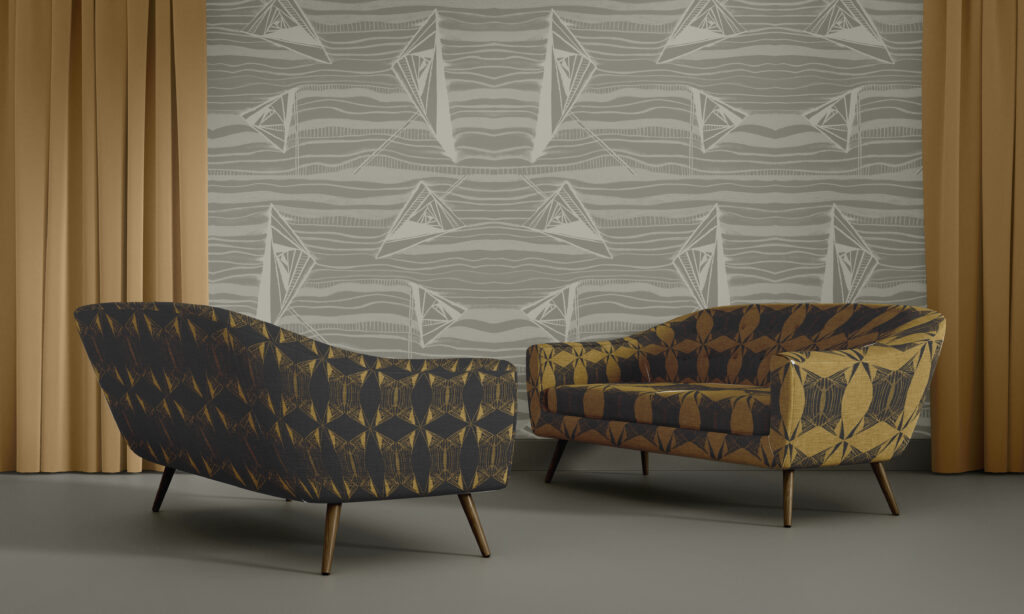
That simple thought opened the door. I began translating the analogue piece into a modular structure — repeating, shifting, echoing the original tensions in a new rhythmic form. The temptation to play with colourways, to let them flirt with the form, was irresistible. I wondered which surface would showcase the pattern best. Instinctively, I turned to wallpaper.
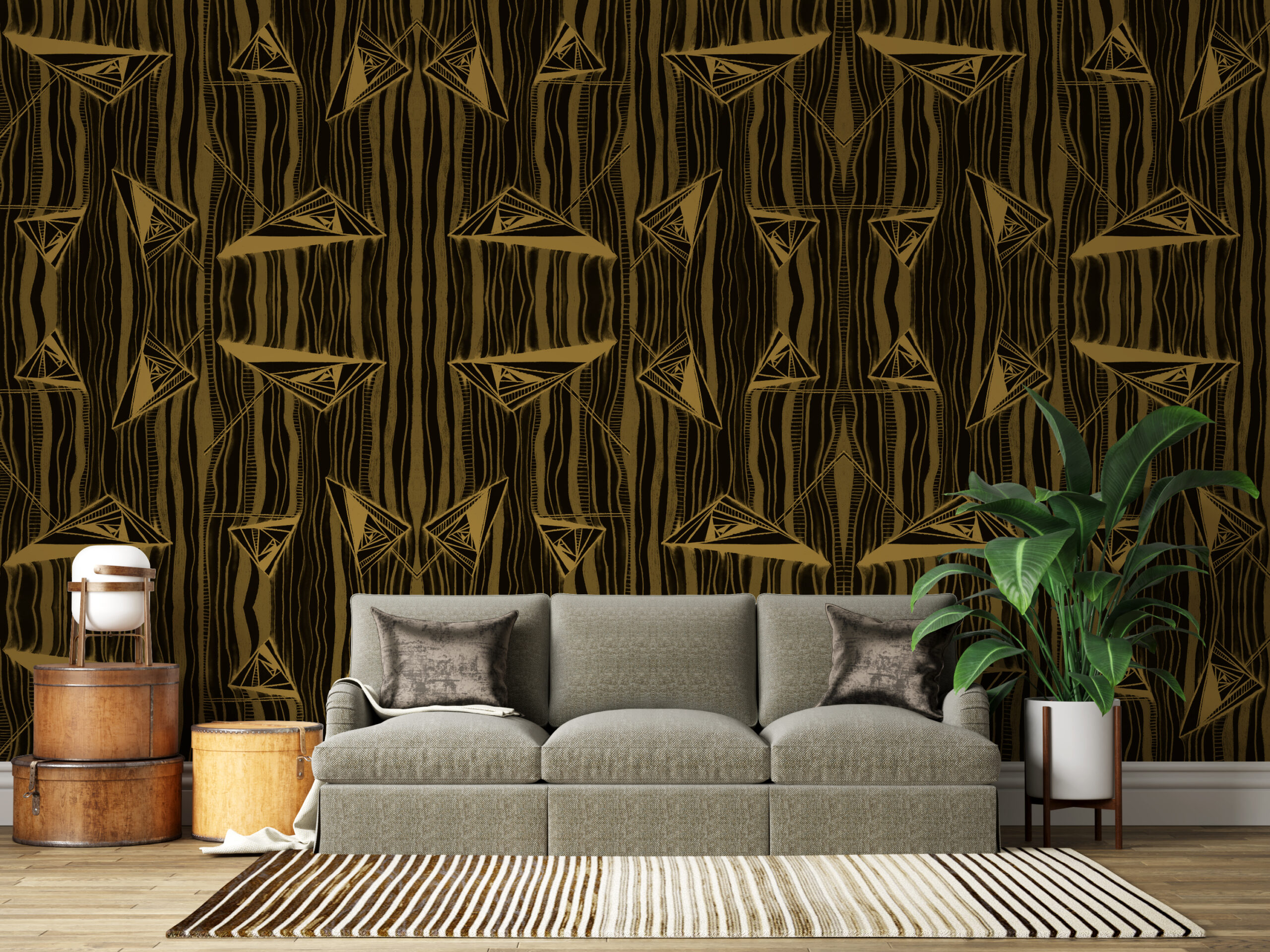
Once the main pattern was established, another question followed:
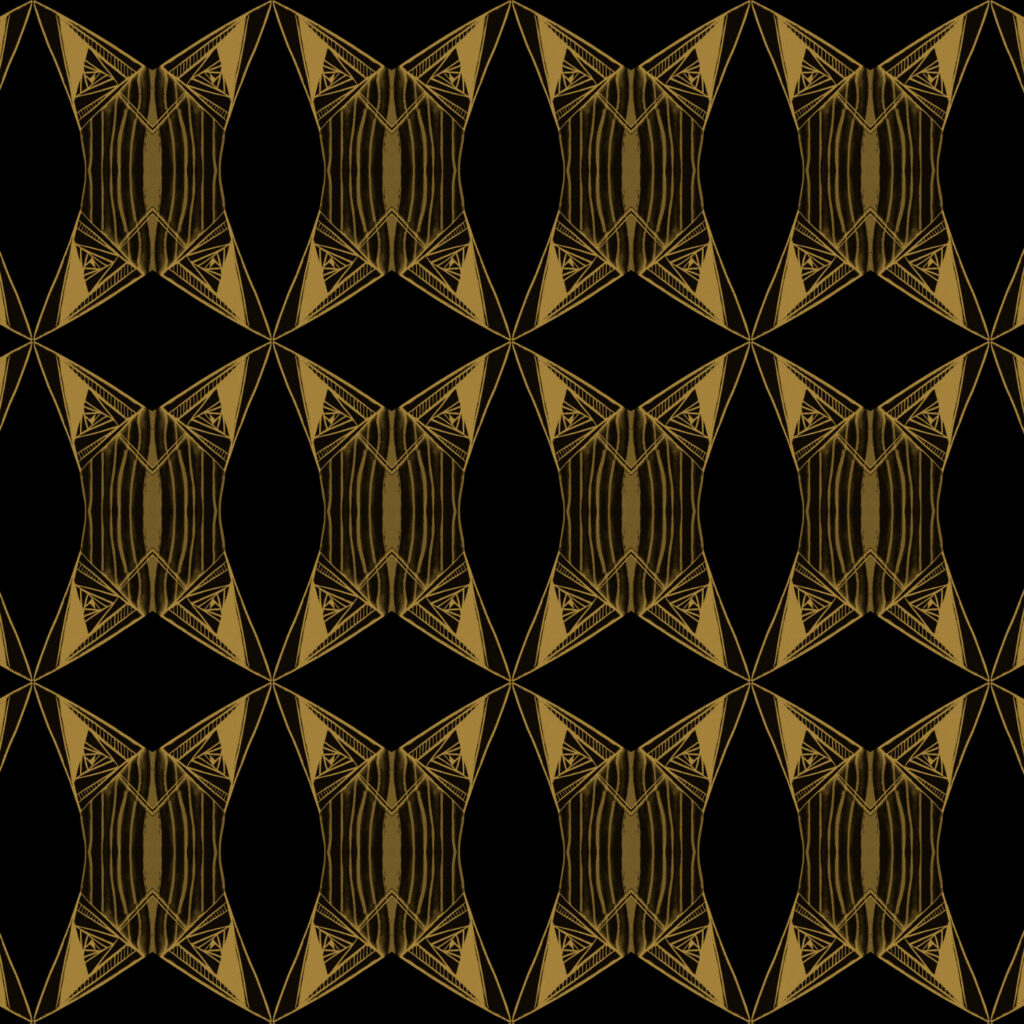
What if I extracted a single motif from EVIL to create a coordinate pattern?
I isolated one shape and allowed it to form its own geometry — what emerged was a pattern that still carries the DNA of the original artwork, but speaks in a different voice.
And then one more thought:
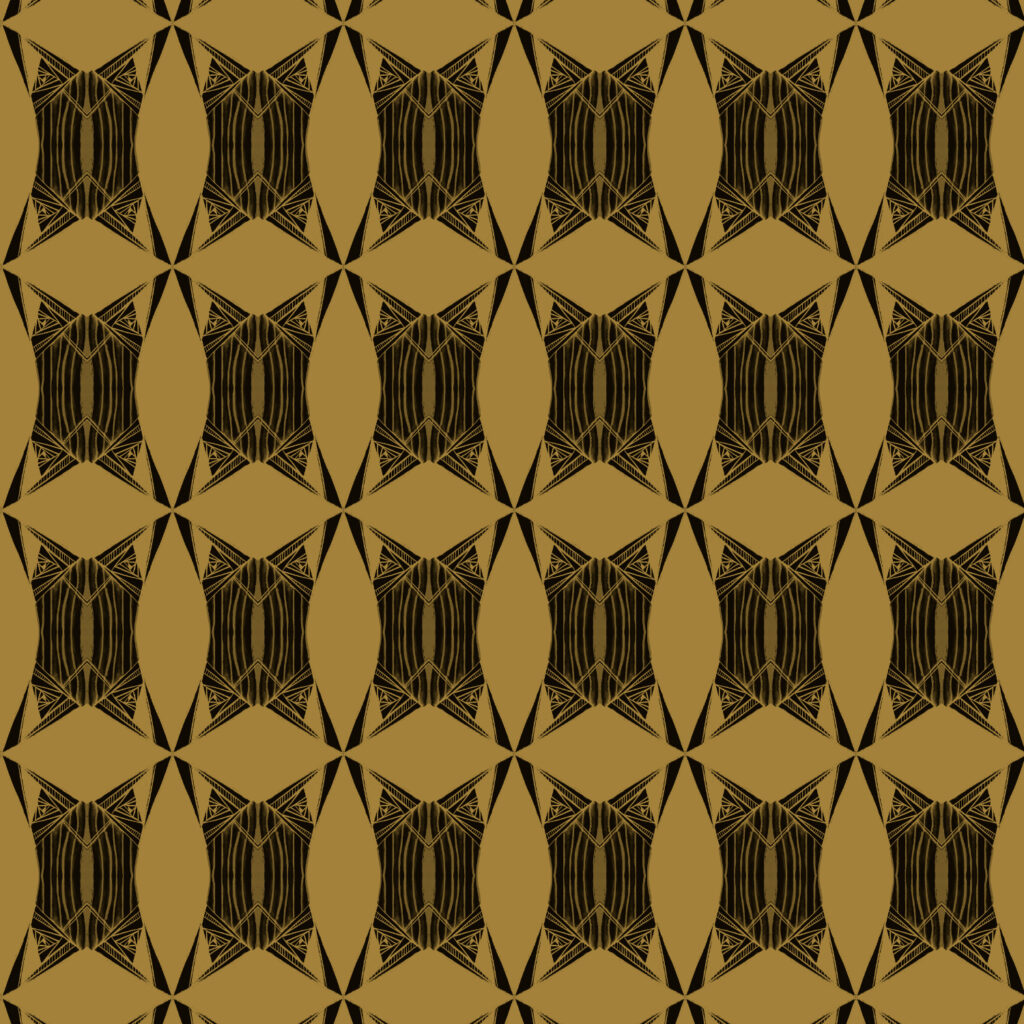
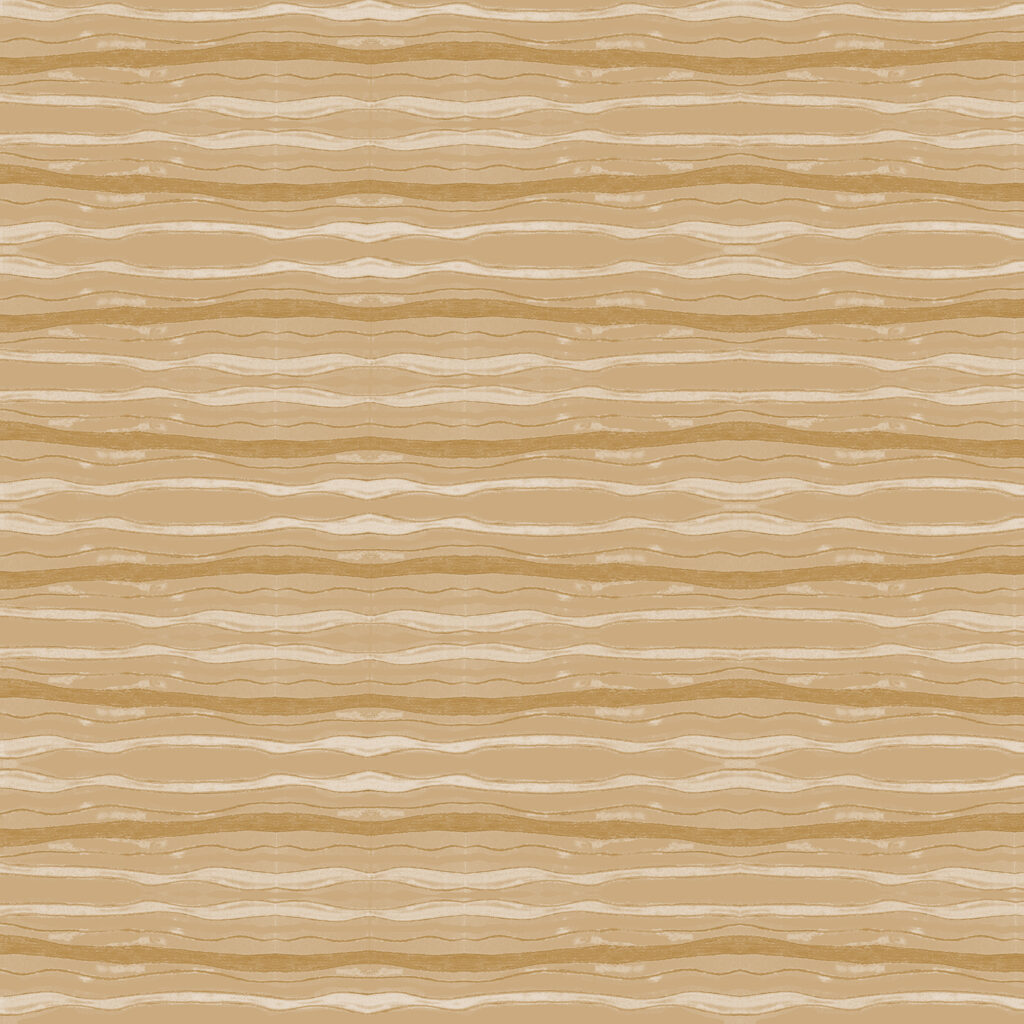
What if I distilled the artwork even further to create a blender pattern — a subtle companion print?
This smaller-scale design works as a background, a filler,
a quieter element that supports the collection without competing with the main motif.
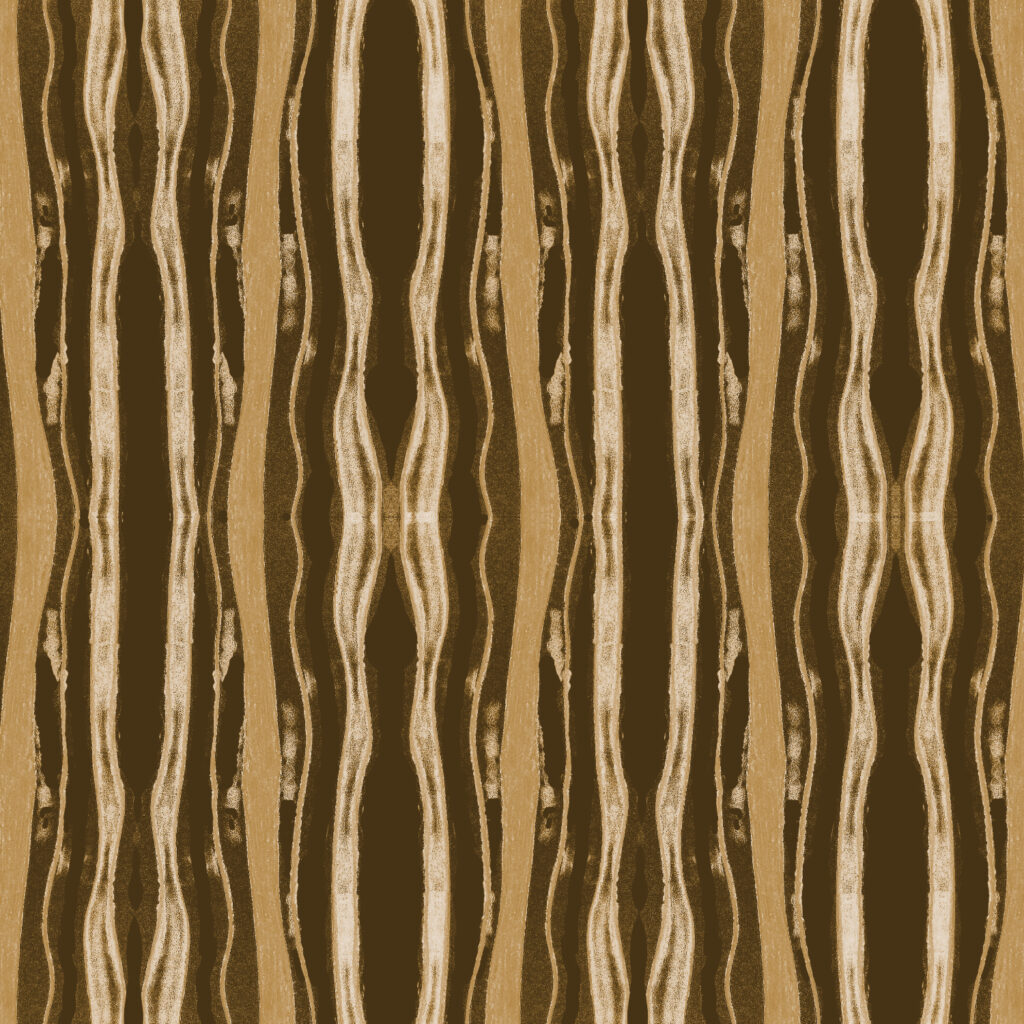
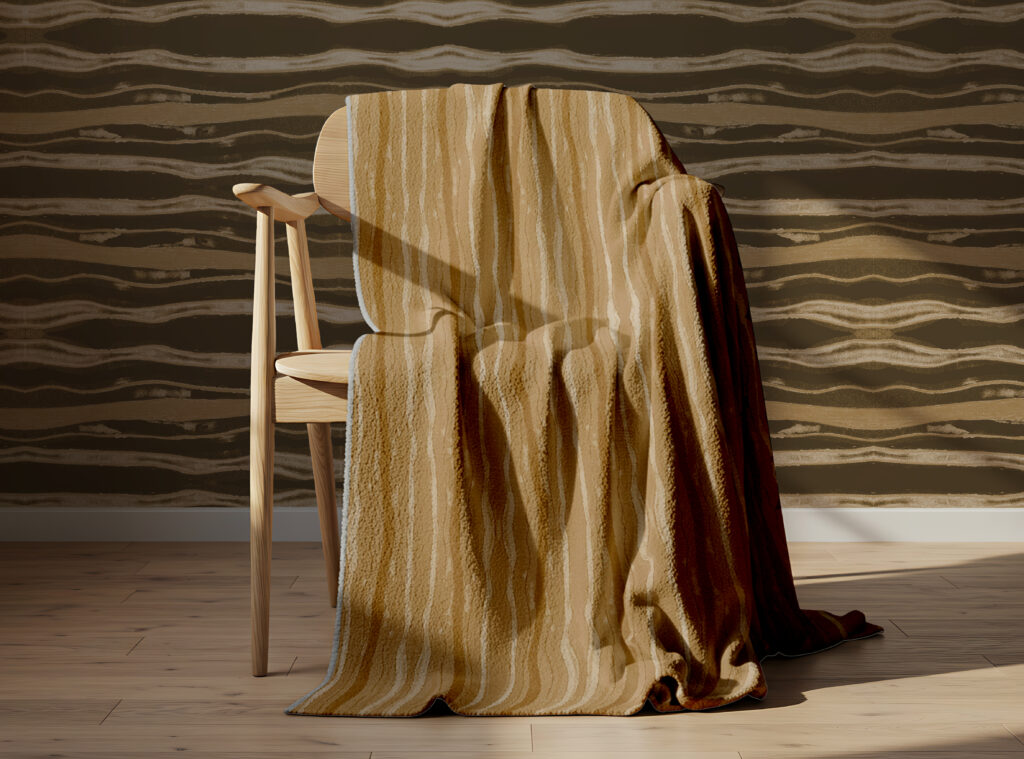
Once the patterns were complete and the collection looked like a cohesive wholness, another layer of the process revealed itself — naming them.
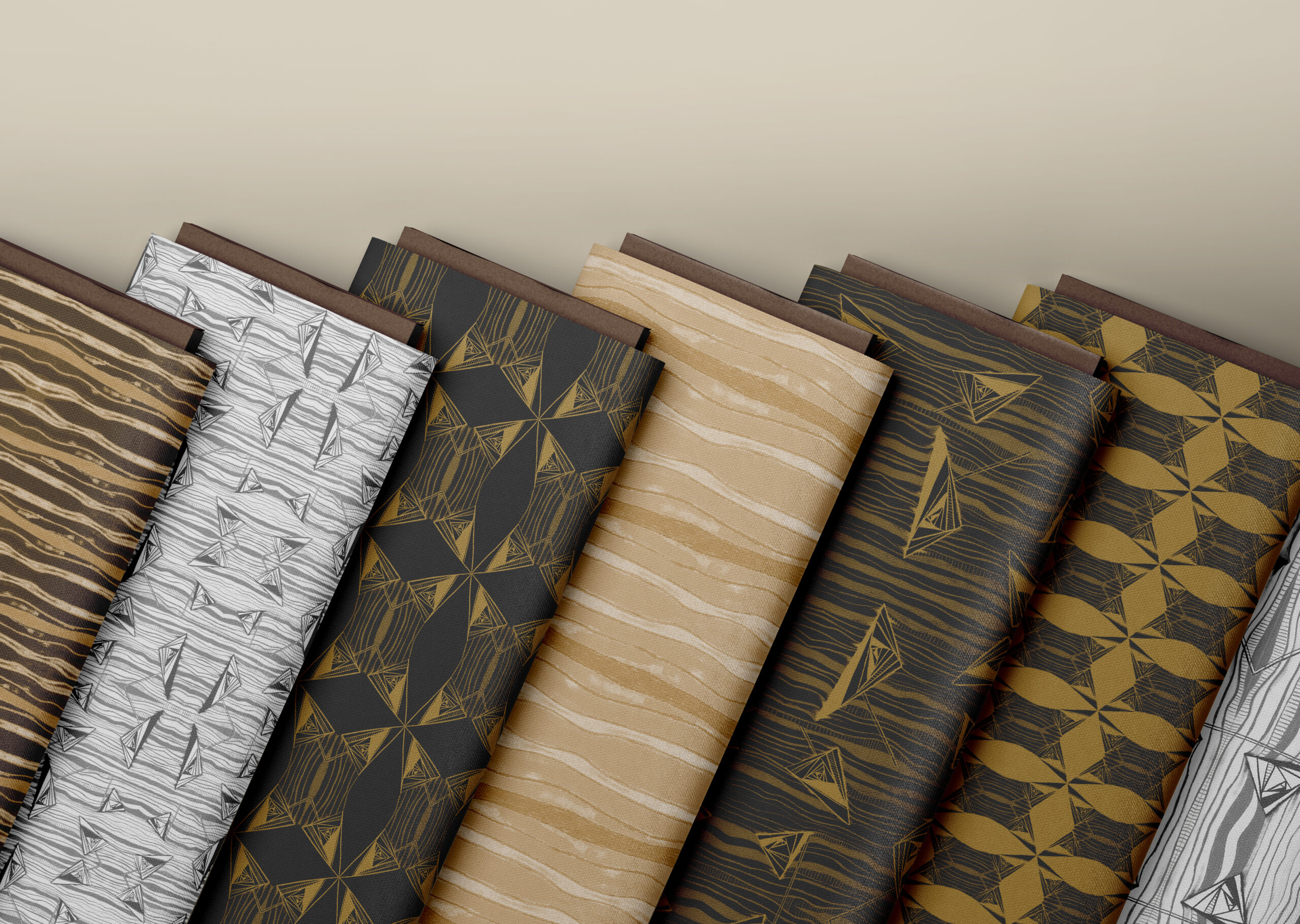
For me, naming is an essential part of creation. It’s where intuition meets language — where the intangible, having taken form, calls for its attire in words. Each pattern has its own tone, its own posture, its own way of settling into the world and finding the right name feels like recognising its character. It’s a moment of resonance when the visual form aligns with the word that can hold it.
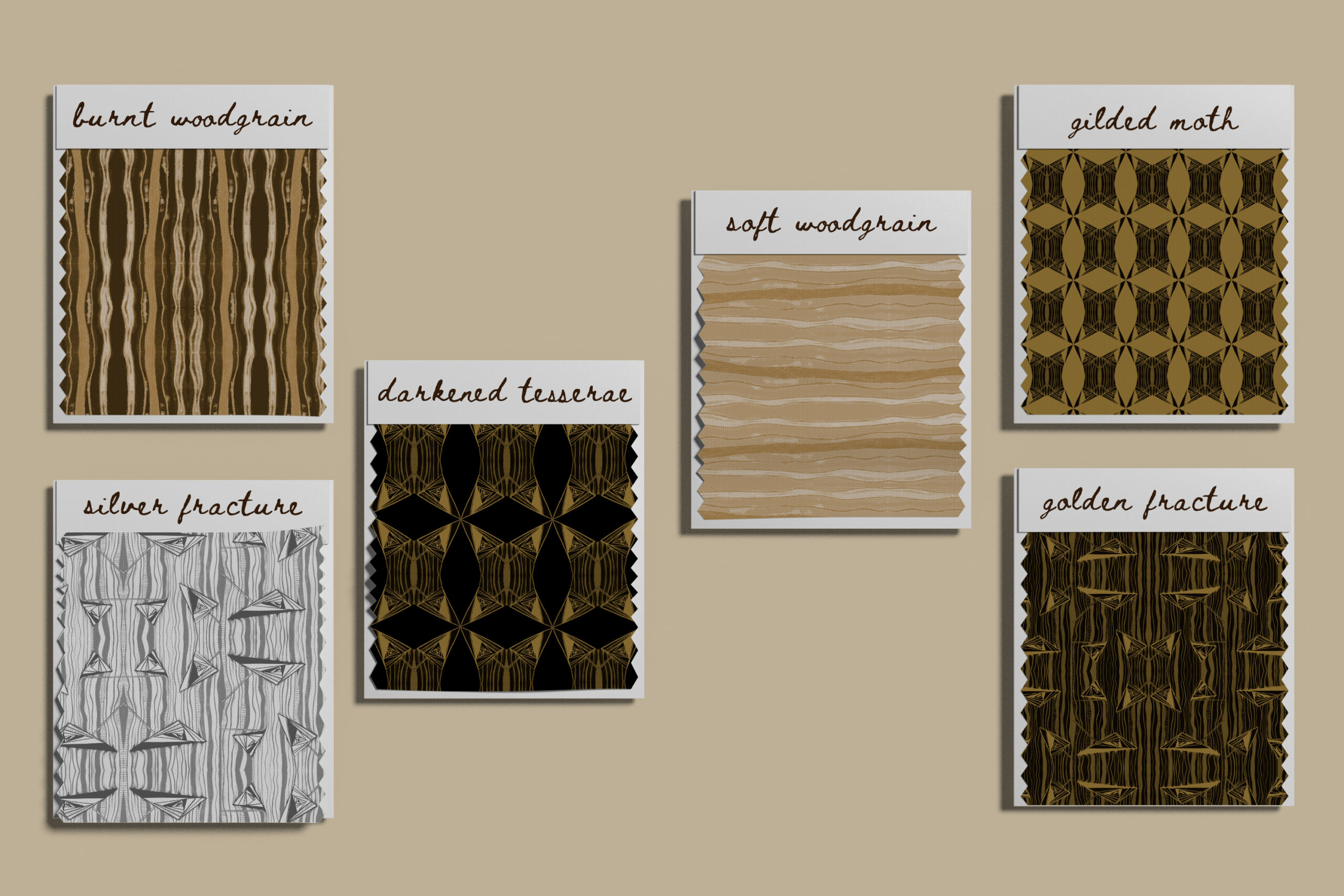
Part of the excitement in making patterns is the unknown. I can never fully predict where a single analogue drawing might lead. Something sharp, colourful and contrasting on paper can unfold into a collection of refined, warm, and quietly sophisticated patterns — a story that holds both edge and gentleness in the same breath.
That uncertainty is both unsettling and irresistible. It’s the place where discovery happens, where the work takes on a life of its own and carries me somewhere I couldn’t have planned for. And perhaps that is the quiet invitation hidden in this process — a reminder that the smallest impulses, the barely perceptible movements inside us, often know the way long before we do. Can you hear yours?